Exercises to help with Osgood Schlatter Disease

Jacob Tober
8 min read
Osgood Schlatter disease (also OSD, or simply Osgood) is a common condition that affects the growth plate at the top of the shinbone (tibia) just below the knee in children, teenagers and even young adults.
It is most commonly seen in adolescents who are actively growing and participating in sports that involve running, jumping, and quick changes in direction.
The condition is characterized by pain and swelling at the top of the shinbone, it can last for months or years if left untreated, and can be quite debilitating into adulthood if left untreated. Osgood can be considered an overuse injury brought on by the combination of large or increasing amount of sports and activity with a rapidly growing skeleton (eg. a growth spurt).
Using exercise in Osgood treatment
Fortunately, there are several exercises that can help to alleviate the pain and swelling associated with Osgood Schlatter disease. These exercises ideally strengthen and lengthen the muscles in the legs and core, which in turn helps to take the pressure off of the growth plate and reduce the risk of further injury.
NB. This blog and the exercises included are for general information only, be sure to seek a medical diagnosis as to the cause of your knee pain and apply caution if considering these exercises.
I absolutely recommend you explore our at-home treatment plan for Osgood which includes a fully mapped out selection of the correct exercises for each phase of recovery.
Stretching exercises
Yes we actually consider stretching exercies. Do not just think of exercises as things which a dramatic and require lifting heavy weights! Doing light stretching is something which impacts and trains muscles, tendons and joints, so should absolutely be considered an exercise.
Stretching the muscles in the leg can help to improve flexibility and reduce tension on the growth plate. Always stretch gently and be wary to not over stretch or place pressure on the knees.
Dive into our blog post about the best stretches for Osgood Schlatter Disease before continuing with any other exercises.
Strength exercises
Part of an effective Osgood treatment is strengthening muscles in the leg to better absorb the forces from playing sport.
Strength exercises should never be completed through pain, as it is essential to listent to your pain levels when addressing Osgood Schlatter Disease.
Here are some exercises we use in latter stages of our seven week treatment plan. Once again I would suggest reading our article about our favorite strength exercises for Osgood for more recommendations.
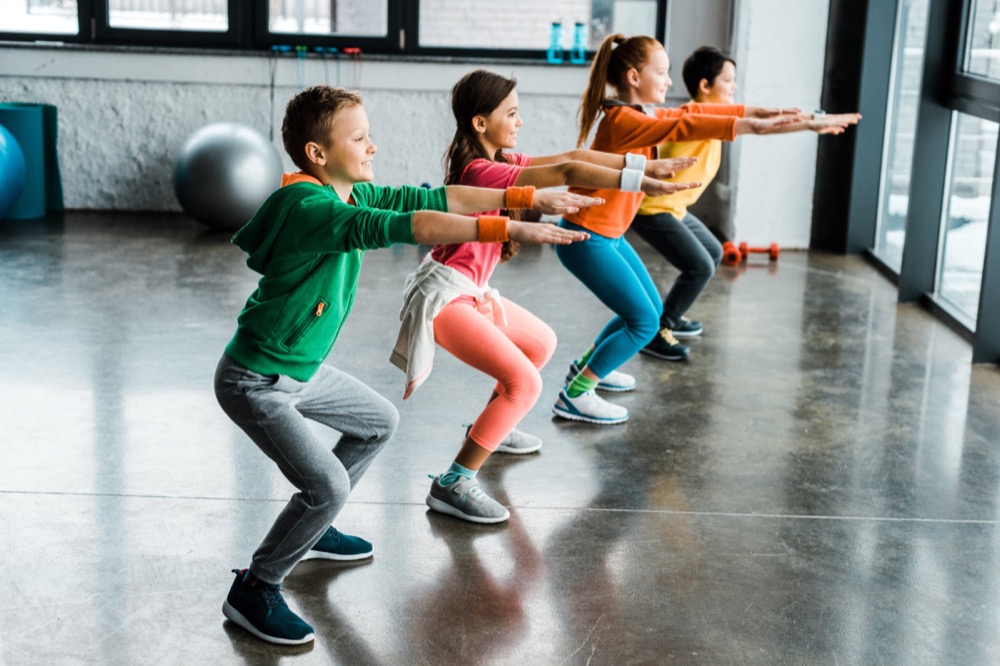
- Squats: Stand with your feet shoulder-width apart and your arms extended in front of you. Lower your body as if you were sitting back into a chair, keeping your weight in your heels and your back straight. Push through your feet to stand back up. Do not squat too deep.
- Calf raises: Stand with your feet shoulder-width apart next to a railing or surface you can hold for balance. Pushing through your big toes raise raise your heels off the ground with the calf muscles, pause in the top position for 1 second before slowly lowering back down. Repeat for 12 repetitions.
- Glute bridges: Lying on your back, bend the knees and place your feet flat on the ground, hip width apart and with the knee at less than 90º. Pressing your heels into the ground, squeeze your glute muscles and push your hips up into the air. Hold for 1-second before lowering back down with control.
Movement skill exercises
Movement skill and efficiency training is a forgotten element of rehabilitation for Osgood Schlatter. A great athlete has fluid and springy movement which not only reduces the impact of jumping and cutting on their joints, but also makes them a fierce opponent to deal with
We consider Osgood an injury rather than a disease, and poor movement mechanics is typically a significant contributor.
Here are two drills you should consider for later stages of an Osgood treatment:
- Skipping and stride outs: Improve rhythm, lightness of foot and economy when running. Start lightly and build intensity and volume slowly over time.
- Ninja landings: Build on your squatting technique by introducing a small jump. Do these on a soft surface, launching just a little off the ground and focus on landing softly and silently.
The importance of relative rest
During treatment of Osgood it is critical to give your knees and legs a break from intense physical activity to enable the opportunity for healing to occur. A lot of athletes have a mindset of constantly wanting to “get after it” so this can be tough.
Try to manage the ammount of running, jumping and quick direction changes you are doing until symptoms begin to improve. Note that complete rest is still not advised for Osgood as this can result in a worse outcome!
Our at-home treatment plan includes the tools to manage relative rest and exercise planning, and empowers you to return to sport from Osgood fast.