The best stretches for Osgood Schlatter Disease

Durham McInnis
8 min read
When you first learn that tight muscles (particularly the quadriceps) contribute to Osgood Schlatters, it sounds logical to start stretching it out.
Unfortunately treating Osgood Schlatter isn’t that easy, and aggressive stretching can make it worse. This is one reason why many doctors and physical therapists advise that the only treatment of Osgood is total rest or even surgery. (Thankfully we think in most cases they are wrong!)
Stretching be incredibly effective, but you have to use the right stretches, at the right time, in the right way.
We want to gently increase the length of muscles pulling on the knees, but we need to avoid irritating the tendon by pulling on it directly, or putting direct pressure on the sore part with kneeling.
Tight muscles can be weak muscles
There is a myth that strength exercises make muscles tighter.
In fact, the exact opposite is actually true!
When we strengthen our muscles we actually increase our mobility at the connected joints. Our bodies are incredibly intuitive, if the brain senses that you do not have enough strength through a joint (say the knee) it will restrict movement and mobility in that joint. One of the ways it does this is by restricting the muscle’s available length, preventing us from going into risky ranges of motion. This stiffness or tightness is actually a protective mechanism.
I note this because I want to be clear you cannot just stretch your way out of Osgood. You must treat the cause of the issue, which generally comes down to lack of strength around the knee in specific positions.
Foam rolling before stretching
One helpful tool we can use of creating length in the quad is gentle foam rolling. Instead of rushing to stretch your quad (and making your tendon more sore), it is important to roll diligently.
Because foam rolling doesn’t directly pull on the knee we have found it to be an instrumental part of pain elimination. Don’t skip it!
Stretches for Osgood Schlatter
We use several great stretches in our treatment plan for Osgood, but it is absolutely essential they are only used at the correct time and in combination with other tools like foam rolling and strengthening.
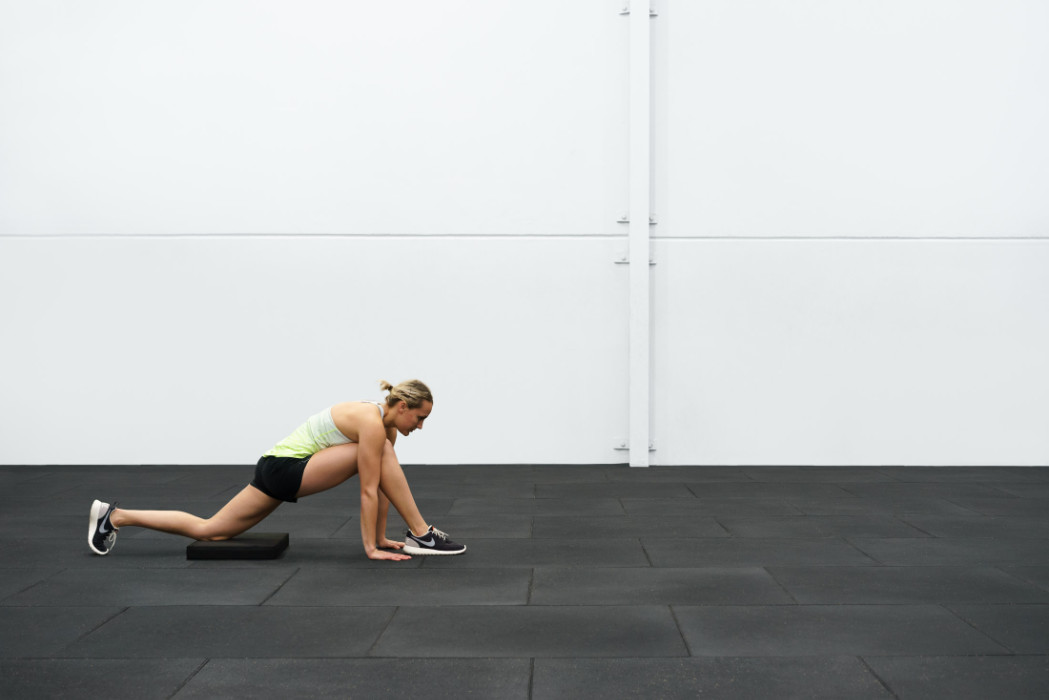
Crouching Adductor Stretch
The adductor is a muscle in the upper leg which contributes to mobility issues, but because the adductor doesn’t directly attach at the site that causes Osgood we start using this stretch early on in our treatment plan to gain additional knee and hip mobility.
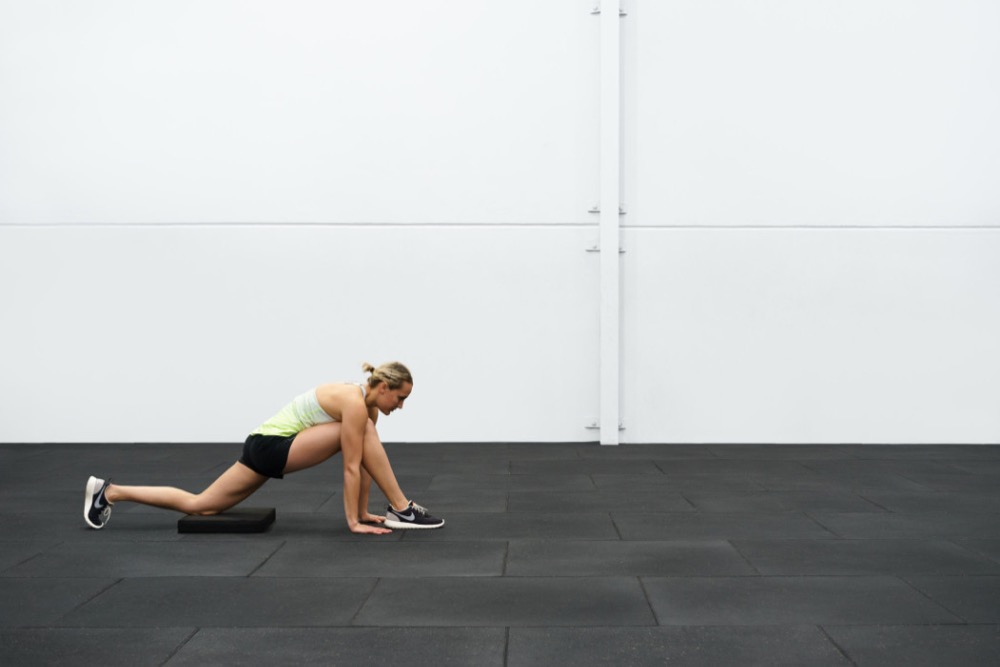
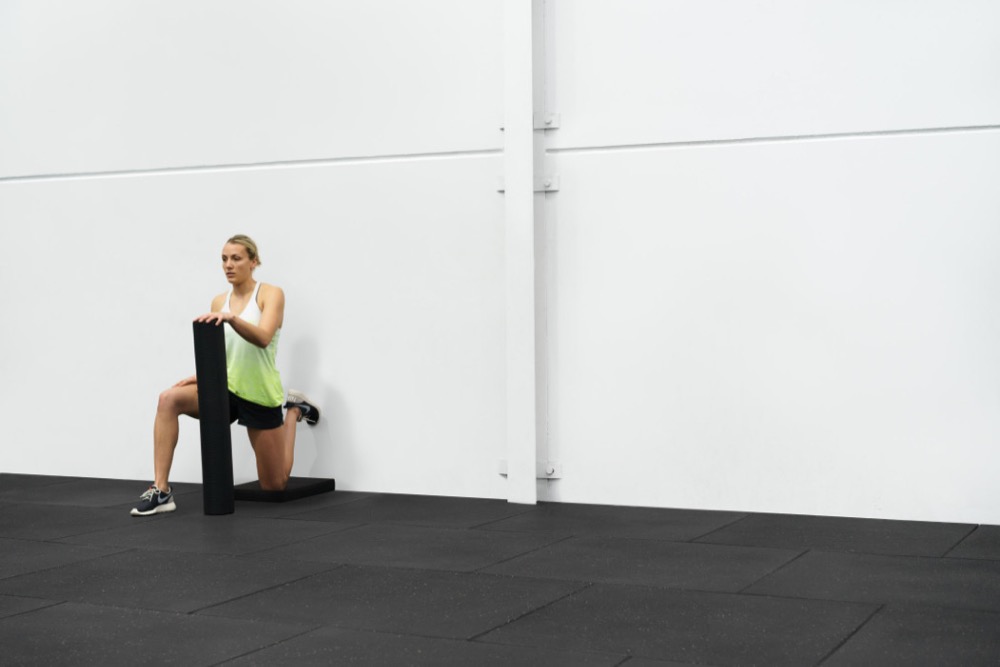
Kneeling Hip Flexor Stretch
Tight hip flexors not only pull on the tendons of the knee directly but also contribute to poor movement patterns. This can even reduce your speed and jumping ability.
Early in a treatment plan it is possible to start using a gently hip flexor stretch to start improving load bearing. It is absolutely critical to use a soft knee pad when performing this stretch.
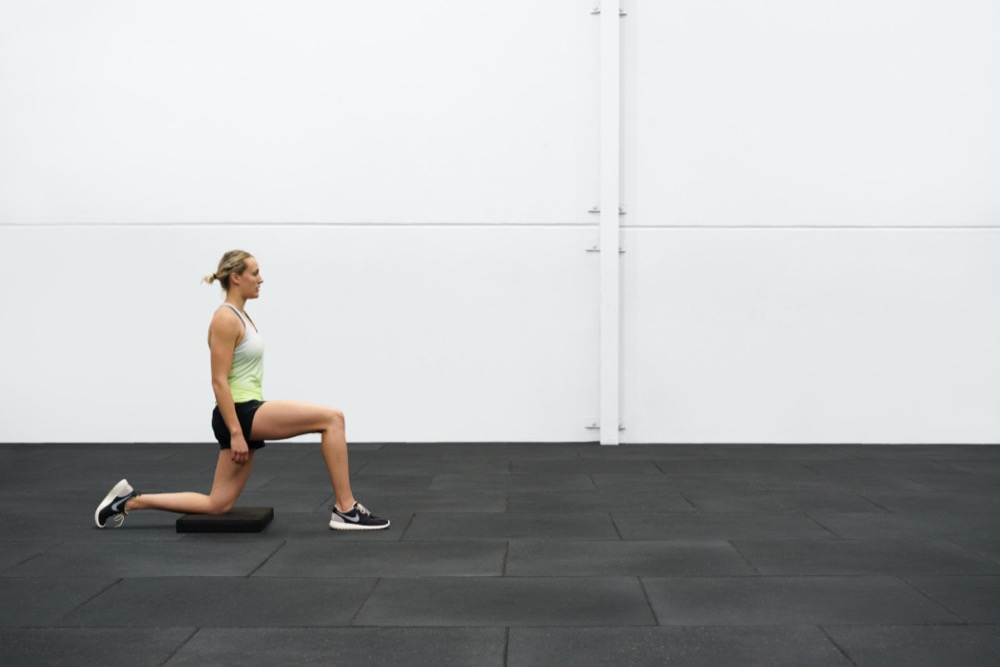
Lying Glute Stretch
The glutes tend to react poorly to Osgood due to changes in running and walking patterns. This means they get tight, and can inhibit good movement.
Later on in a treatment plan it makes sense to give some attention to ensuring the glutes are strong and flexible.
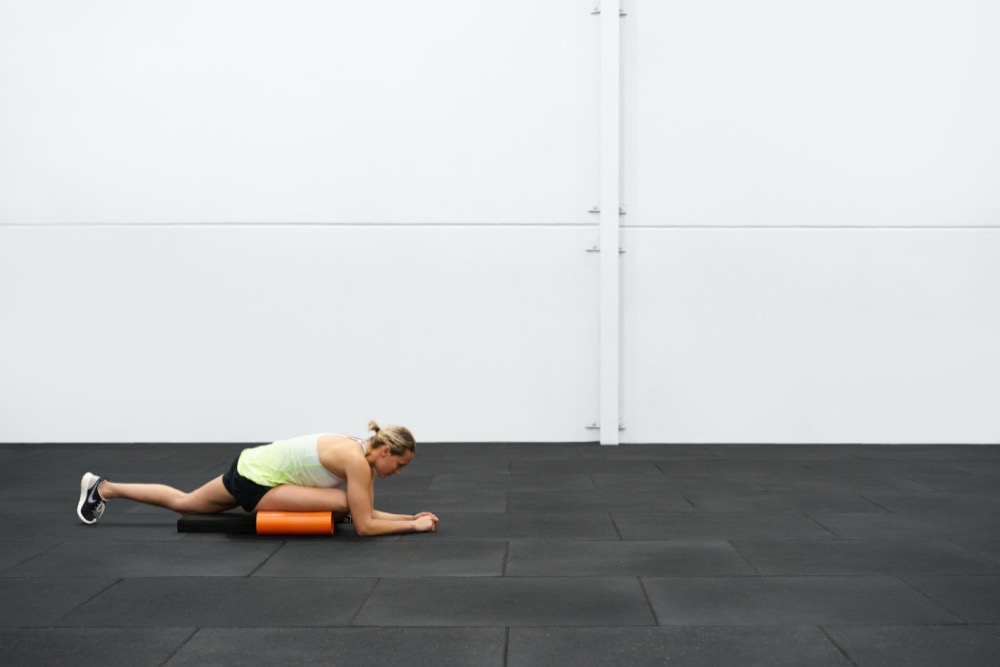
Kneeling Rec Fem Stretch
An advanced but critical stretch of Osgood treatment. There is significant risk using this stretch too early and making symptoms worse. Again it is critical to use a knee pad here.
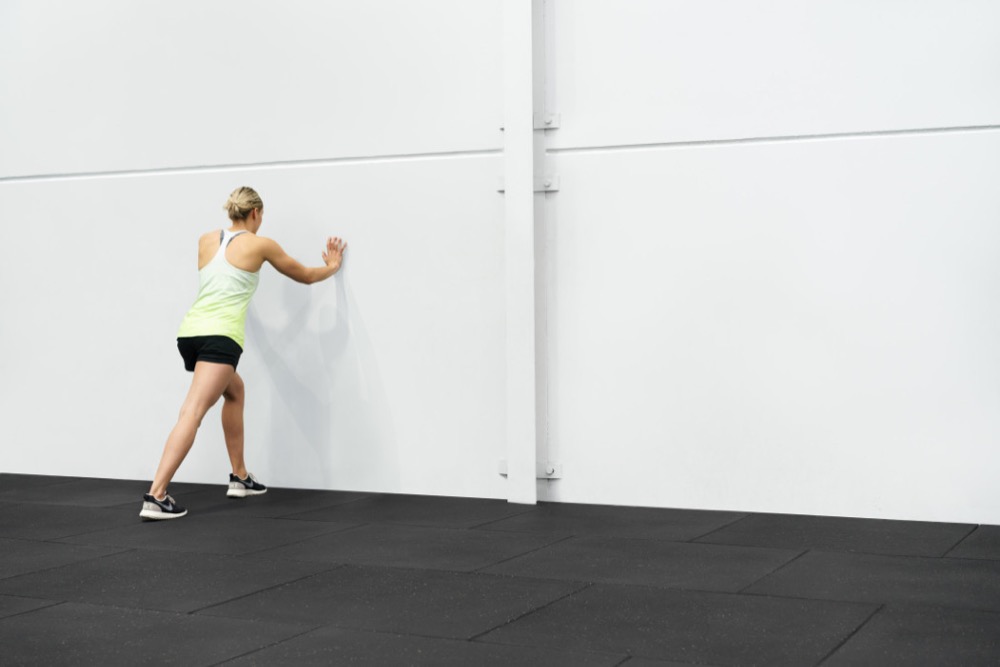
Standing Calf Stretch
Calves don’t get a lot of attention in Osgood Schlatter treatments, and this is a shame.
Later in the process athletes will be learning new movement patterns, requiring athletes have more “spring” in their gait. The calf plays a big role here, so it is good practice to introduce some calf stretching to keep them nice and happy!
Putting stretches into a plan
Remember it is critical not to rush stretching. Doing aggressive stretching or using stretches too early in a rehabilitation for Osgood can absolutely make the problem worse.
We have worked with hundreds of athletes in our facility, and thousands online to treat Osgood Schlatter. Our careful prescription of foam rolling, stretching and strengthening has been developed over years of testing, and is both effective and safe.
I strongly encourage you to explore out treatment plan which includes everything you need to tackle Osgood from home.