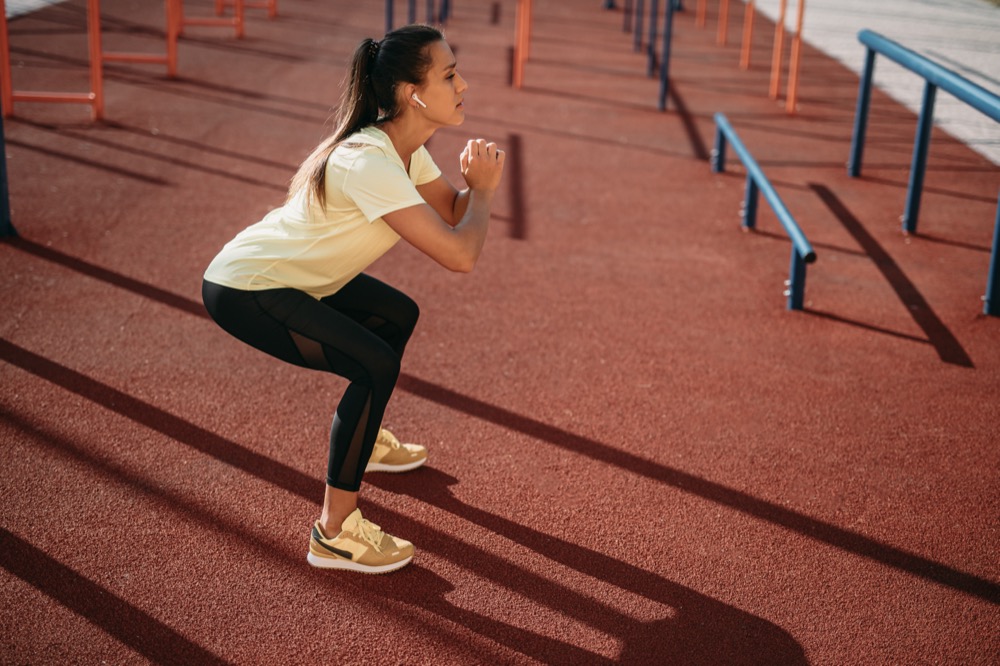
Squats for Osgood Schlatter knee pain

Durham McInnis
8 min read
Knee pain in young athletes can often be a sign of Osgood Schlatter Disease, a common condition affecting the knees. If your child or a young athlete you know is facing this challenge, the traditional prescription may feel like an endless waiting game. However, rehabilitation for Osgood Schlatter Disease doesn’t need to be a waiting game at all!
In this blog, we’ll explore why our treatment plan leverages the power of squats to develop strength and resilience.
Understanding why squats help Osgood Schlatter Disease
When young athletes with Osgood experience knee pain, the muscles around the injured area become inhibited as a protective mechanism, especially the quads.
The resultant weakness and atrophy in the leg muscles only makes the Osgood pain worse. However, with carefully chosen exercises like squats and a progressive training plan, we can awaken those muscles, build strength, and return to sport pain-free.
Squatting itself is not bad for Osgood Schlatters, but how you perform your squats is a crucial step to getting a positive or negative result. The biggest mistake we see is athletes trying to do full depth squats.
Instead, opting for shallow, comfortable squats is a much better strategy.
The myth of stunting growth
A common misconception is that weight training, including squats, can stunt growth in children. But the evidence shows that age-appropriate training not only increases strength, reduced Osgood Schlatters symptoms but can also lower the risk of future injury, and even improves self-esteem.
Squats won’t stunt growth but rather promote a more robust body capable of handling sporting demands. We have a whole article about this myth you can read here.
Including squats in the training regime helps build muscular strength to absorb forces and loads seen during sports. Our Osgood plan utilizes bodyweight movements and targeted exercises to develop strength in the lower body, targeting muscles that support and stabilize the knee.
When to start training strength?
If your child is experiencing Osgood pain, now is an ideal time to embark on a sensible strength training journey. As part of that squats will generally be a foundational exercise.
Our seven-week Osgood treatment program includes professional guidance on exercises, video demonstrations, an exercise workbook, plus expert support.
Osgood Schlatter Disease can be a frustrating and debilitating condition, but with a sensible plan of attack we see many young athletes recover, and even go on to be more athletic than ever before.