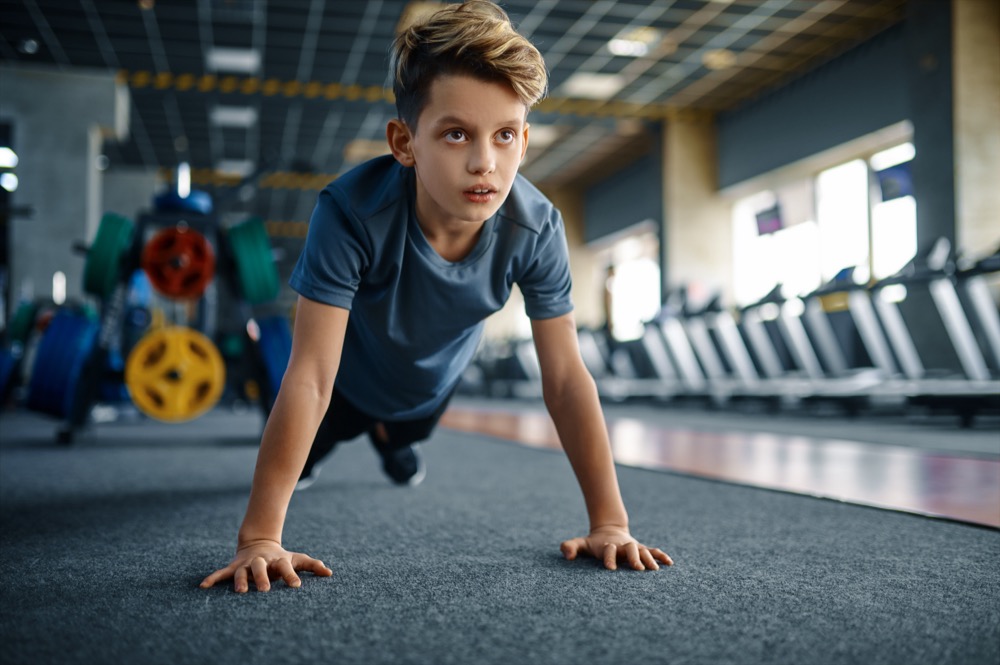
Strength training does not stunt growth

Jacob Tober
8 min read
One of the most persistant myths over the last few decades has been that strength training for children and teens stunts growth.
Frequently parents with very young teens are concerned when they start our Osgood program because of this myth. In many cases they were told this when they themselves were teenagers!
The myth is based on an idea that young developing bodies are not able to tolerate the stress of strength training on their growth plates.
Every myth starts somewhere, and this one emerged from some very old research that looked at explosive-style Olympic Weightlifting in adolescents. That study did show young weightlifters created damage to their growth plates, this is an extreme form of weight training so far removed from what is used by sensible coaches.
The body of scientific evidence shows this study is an outlier, and is simply not the case for normal strength training. In fact, with age-appropriate training, the evidence points towards increased strength, lower rates of sports-related injury, increased bone strength index (BSI), decreased risk of fracture, and improved self-esteem to boot.
We talk more about this myth and where it came from in episode 54 of our podcast.
Lifting weights won’t stunt the growth of children and teenagers - when programming in an age appropriate way. We have over twenty years of coaching experience and more than 3,000 athletes having successfully completed our online program, our first-hand evidence backs this up.
When sprinting, jumping and landing, athletes can put as much as 6-8x their bodyweight of force through their joints and growth plates. This amount of load is dramatically higher than the amount of load that is used during strength training!
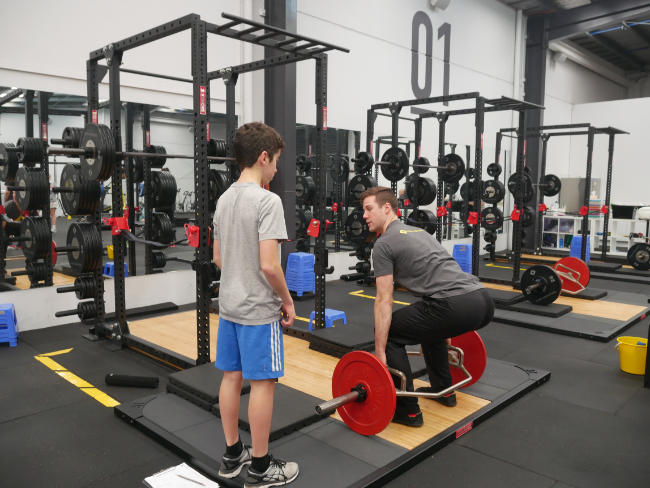
Another benefit of strength training, especially for teens with Osgood Schlatter, is increased movement skill
Learning great shapes and patterns with bodyweight or a small amount of external load help build robust and strong bodies capable of moving better in sport, and that can better cope with sporting demands. We have a whole article about strength exercises for Osgood Schlatter which covers this in more detail.
Throughout our Osgood Schlatter treatment program, we utilise bodyweight movements and targeted exercises with up to 15lbs of external load. This lets us develop strength in the lower body and core, targeting the muscles that support and stabilise the knee and lower leg to rapidly improve the sympoms of Osgood and get athletes back to sport fast.