Causes, symptoms, and treatment of adult Osgood

Durham McInnis
8 min read
What Causes Osgood Schlatter Disease in adults?
Osgood-Schlatter disease is a condition in teenagers that emerges during a growth spurt. With repetitive overuse the patellar tendon, which attaches the kneecap (patella) to the shinbone (tibia) becomes irritated and inflamed.
We wrote about adult osgood before and explained how in adults it isn’t Osgood per-se but a pattelar tendonopathy — fundamentally the same problem, just without the growth spurt!
We encounter two types of adults who get “adult Osgood”:
- People who had Osgood Schlatter Disease as a child and were given rest as the only treatment (eg waiting the growth spurt out)
- Adults who just started a new workout, sport or activity
In the first case you will often have the side-effects of teenage Osgood, such as the bony lump under the knee.
In adults who didn’t have Osgood as a child, OSD-like pattelar tendon inflamation can occur due to:
- Sports that involve frequent jumping and landing (e.g. basketball, volleyball)
- Jobs that require frequent kneeling (e.g. construction, carpeting, landscaping)
- A prior injury that wasn’t properly rehabilitated
- Having Osgood Schlatters as a child
- Anatomical factors like flat feet, knock knees, or muscle imbalance/weakness
Symptoms in adults
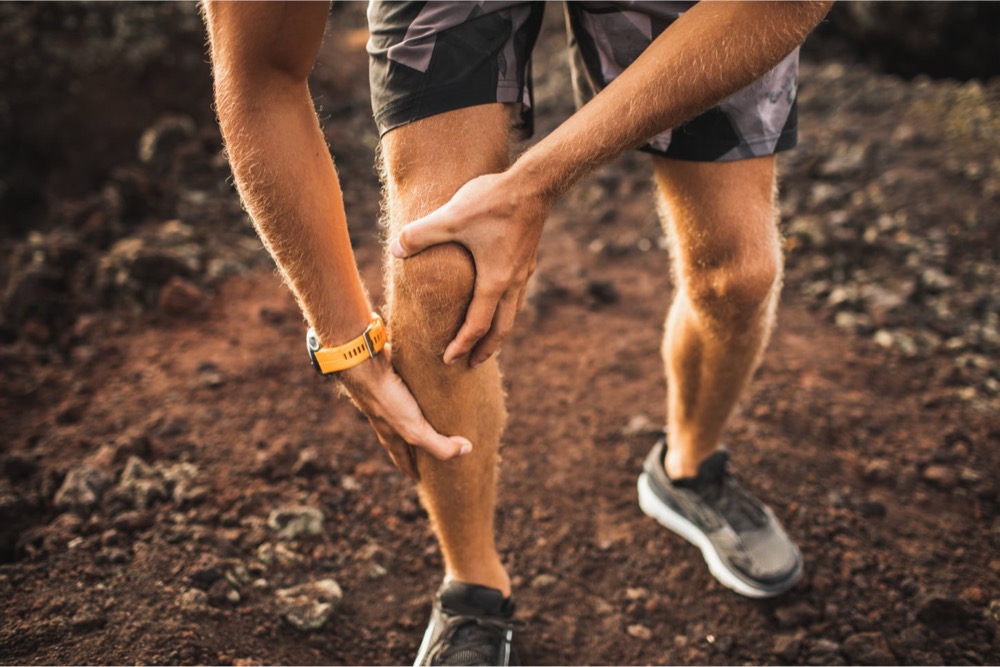
The main symptom is pain below the knee cap, where the patellar tendon attaches to the tibial tuberosity. This is often worse with activity.
Other symptoms may include:
- Swelling and tenderness below the knee
- A bony lump (ossicle) below the knee cap
- Stiffness in the knee joint
- Leg weakness
- Difficulty kneeling or squatting
Getting an Osgood-Schlatter diagnosis
Seek medical advice if you have unexplained knee pain that doesn’t improve with rest. Your doctor will examine your knee and may order imaging tests to confirm patellar tendinopathy or a different diagnosis.
Symptoms can be confused with other knee conditions like chondromalacia patellae.
Should you use ice on your knees?
As with most overuse injuries, initial treatment involves rest, and avoiding aggravating activities. However rest is only a short term way to relieve your pain, and returning to activity progressively is essential for proper rehabilitation.
Recent research has shown that routinely icing injuries may not be beneficial. Icing can temporarily reduce pain and swelling, but it does not promote long-term healing.
In fact, icing may delay recovery by suppressing the inflammatory response needed for the body to heal itself. For this reason, we do not recommend icing during our program unless you are experiencing severe pain.
Surgery to remove the boney lump
Surgery typically involves removing bony ossicle, shaving down the tibial tuberosity, and/or partially detaching and reattaching the patellar tendon
While surgery may remove irritated tissue and reduce the size of your bump it does not address the root cause of OSD, which is most often muscular weakness and imbalance.
It’s important to be aware that surgical outcomes are unpredictable. Many patients still have anterior knee pain after surgery. The recovery period post-surgery requires an extended break from sports and activity which can set you back even further. For these reasons, we absolutely recommend exhausting conservative treatment options before considering surgery.
Our adult-Osgood treatment plan
Given our success treating Osgood in teenagers its no surprise that many adults used the program to resolve their condition. We have adapted the program especially for adults.
The plan will help you:
- Gradually increase load and activity levels
- Perform targeted strength training to activate the quadriceps and strengthen the legs
- Improve movement patterns and muscle balance
- Use self-applied manual therapy techniques to improve flexibility
It is never too late to address the root causes of Osgood, even in adults! I encourage you to check out our at-home treatment plan and consider if it is right for you. Note we offer the exact same no-questions-asked refund policy as we have with our teenage Osgood plan.