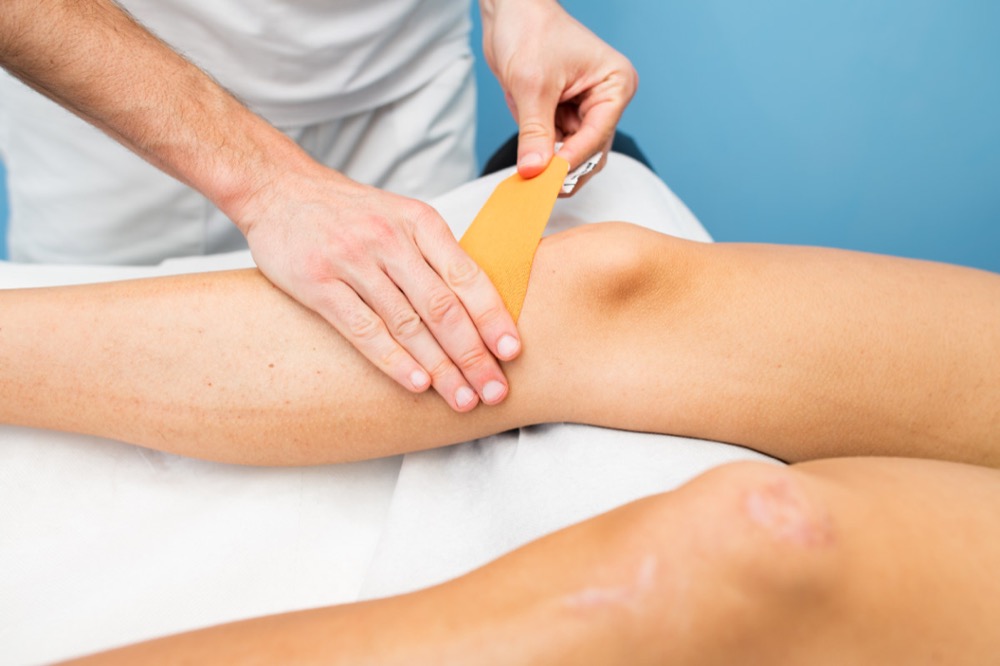
How to tape a knee for Osgood Schlatter Disease pain

Jacob Tober
8 min read
There is a lot of debate about whether KT tape is actually beneficial for people suffering from growing pains like Osgood Schlatter or Severs Disease.
While it certainly not harmful, it’s worth going through the pros and cons before buying your first roll. Read on to learn more, and find our favourite taping method.
What is KT (kinesiology) tape?
Kinesiology tape is known as KT Tape, Rock Tape, Elastic Therapeutic Tape and several other names depending on the brand.
Essentially it is flexible stick-on tape similar to the athletic tape used to strap joints. It differs in its flexibility. While strapping tape is very rigid (so that it supports the joint), kinesiology tape is more stretchy. You will know it is there, but won’t be so restricted in your movement.
KT tape is normally placed strategically across a joint or muscle group to help an athlete “sense” changes in position. This may increase proprioception, and add a little spring to shift joints in a desired direction.
There are many theories as to why KT tape might be helpful in treating injuries. There are some studies which show KT tape has a small effect on reducing the perception of pain, and also potentially increasing blood flow or create a little space in joints which can reduce inflammation and aid recovery. It may even simply be a placebo effect for some conditions, but if it helps - even just by improving confidence and mindset - that is still a pretty cool benefit!
Can KT tape help my Osgood Schlatter symptoms?
KT tape can be helpful for Osgood due to its effect on proprioception. The athlete will have better awareness of their knee and thigh muscles, may feel some pain relief, and may feel more confident in their movement.
If you are following a methodical and deliberate Osgood Schlatters treatment plan like ours then using KT tape is very much optional. The keys to recovering from Osgood are targeted strengthening and stretching, you should think of KT tape as a nice-to-have rather than essential.
We do not believe there are any direct curative benefits of KT tape in Osgood Schlatter cases, but that isn’t meant to disuade athletes who find tape builds their confidence. In general however we would recommend knee pads over tape, as these have the added benefit of protecting the knees from bumps. Bumps and knocks to the knee can be quite bad for athletes when returning to sport with Osgood.
Is KT tape the same as strapping tape?
Strapping tape is much stiffer than KT tape, and used for ligament injuries. In the knees for example it is common for an athlete rehabbing from an ACL tear to have their knee strapped. In these cases the tape is there to provide significant additional structural support so the damaged ligament is not loaded.
Strapping tape is not really helpful for Osgood Schlatter treatment as it binds the knee in a way which prevents the athlete from using their full range of motion. When poorly applied, rigid tape can also cut into the tendon on the front of the knee and make pain worse. We advise against using rigid strapping tape unless applied by and recommended by a medical professional.
How to tape the knee for Osgood
For Osgood Schlatters there are a few options for applying tape, we like the following specific way to apply KT tape.
The tape should be applied in a “U” shape underneath the knee. It is important that tape is not used on top of any sore bump.
- Start by measuring out a portion of tape that will wrap around the bottom half of the knee cap.
- Cut to length, and round the edges off to prevent it peeling easily.
- Start on the inside of the knee and apply the first 1-2 inches with 0% stretch applied to the tape.
- Then holding the first section in place, stretch the middle 4-6 inches of tape to 50-60% of its stretch and apply to the bottom of the knee, wrapping under the kneecap in a “U” shape.
- Apply the final 2 inches with 0% stretch.
- To finish rub the tape with your hands to improve the adherence and ensure it is well stuck to the skin.
As mentioned earlier, tape should be considered only a small part of treating Osgood. It is important to make sure you are addressing the underlying cause rather than just the symptoms. One way to do this is with the Core Advantage seven week treatment plan for Osgood Schlatter Disease. This plan has helped thousands of young athletes overcome their pain and go on to be stronger and more athletic than before.